We use audience measurement tools (such as Google Analytics 4 and Clarity), via Google Tag Manager, to understand how the website is used and to improve it. The data are used for statistical purposes only and are not used for targeted advertising.
Laos
Mine Action
Humanitarian demining Capacity building
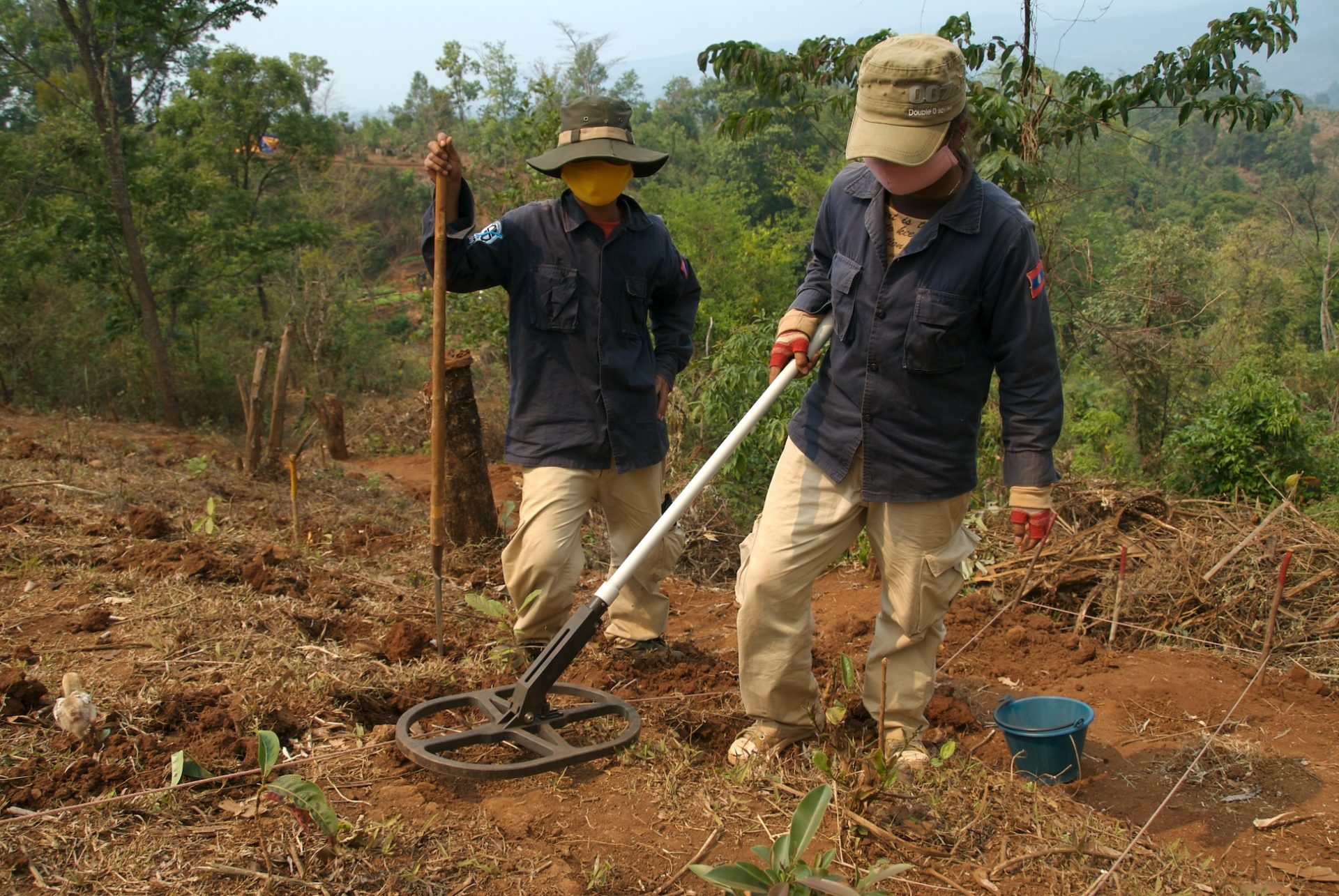
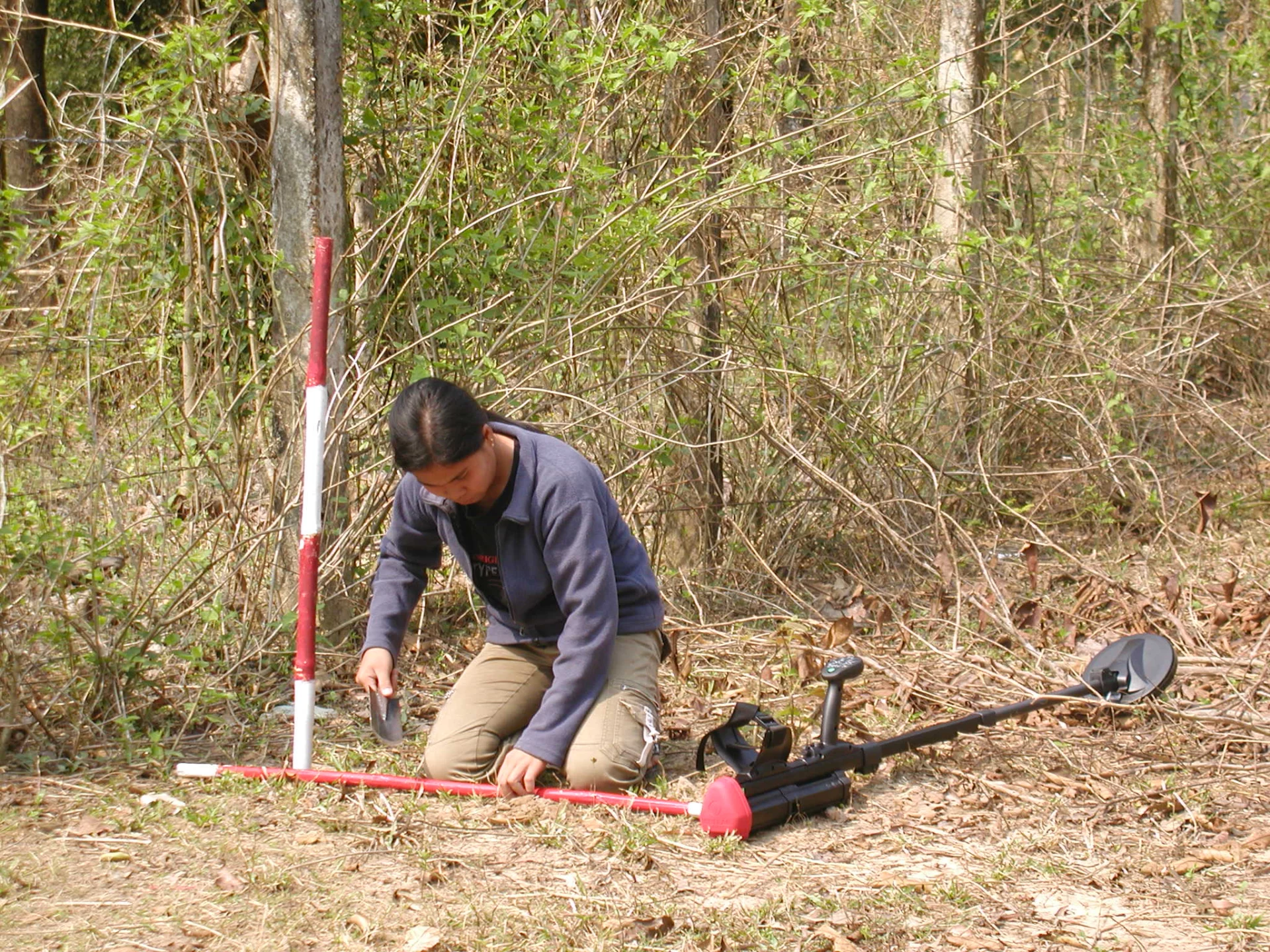
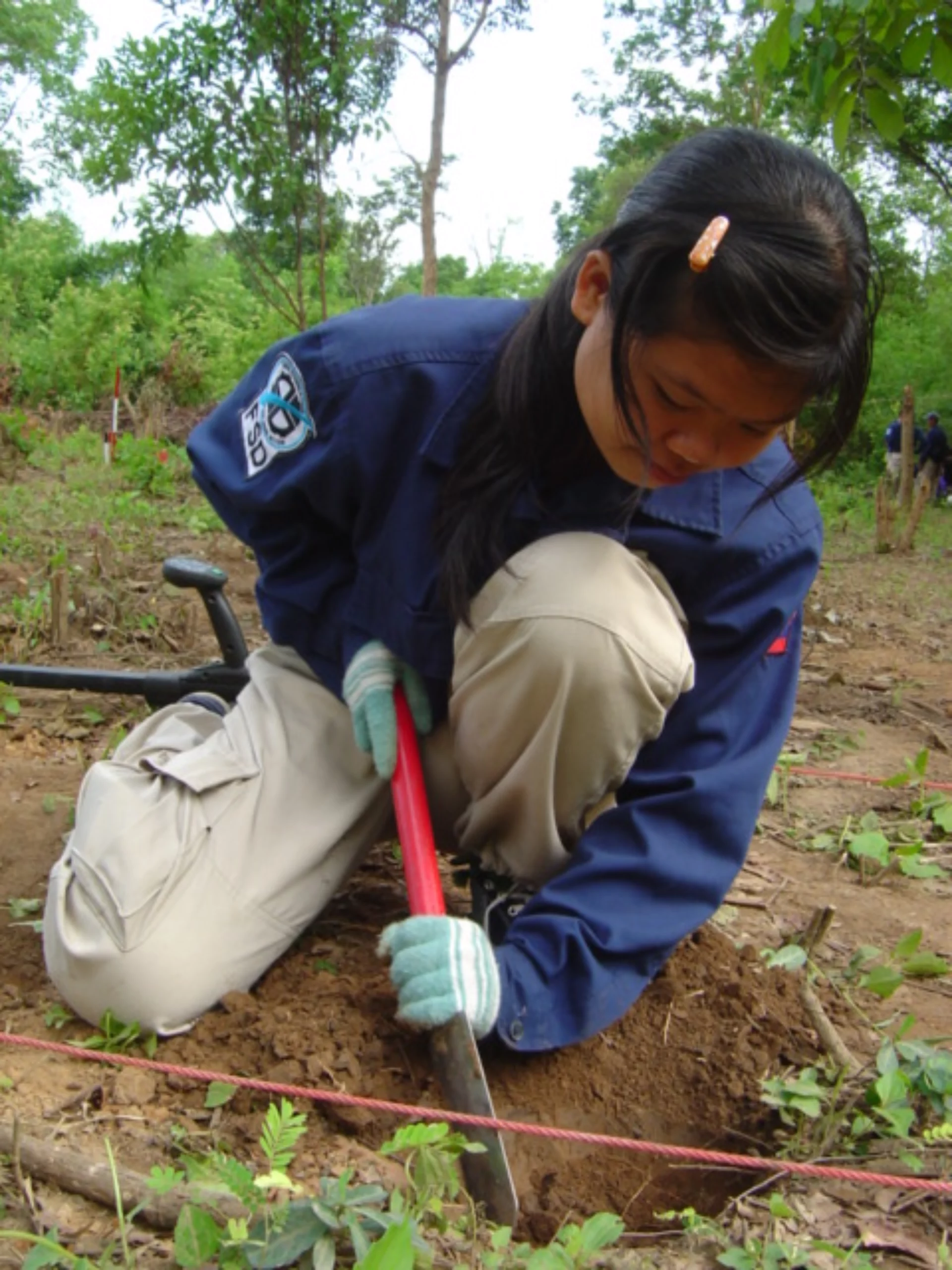
Between 2004 and 2010, FSD supported the development of mine action in Laos by combining clearance operations, specialised training and institutional support to national authorities. These efforts contributed to improving food security and strengthening local capacities.
A legacy of the Vietnam War
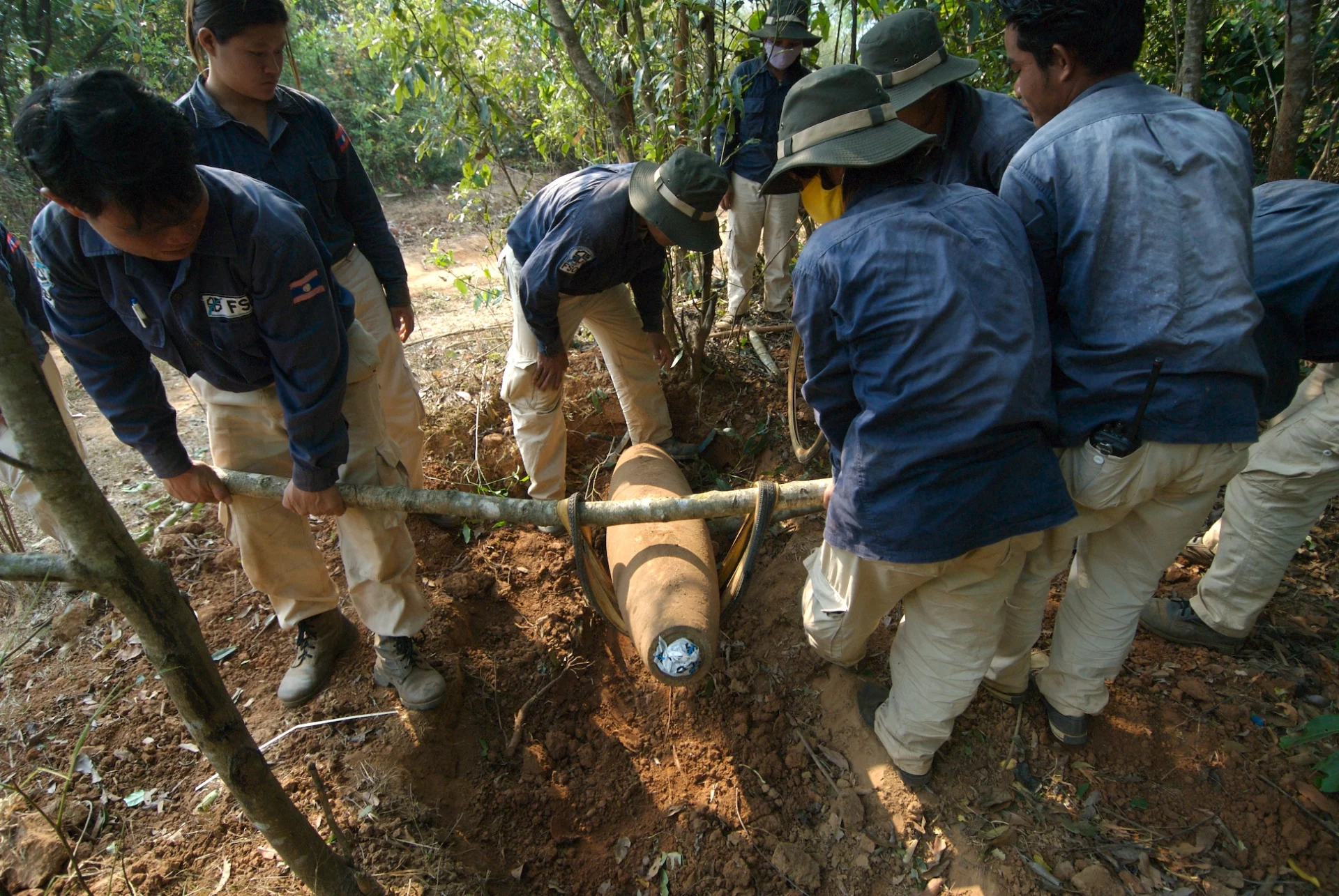
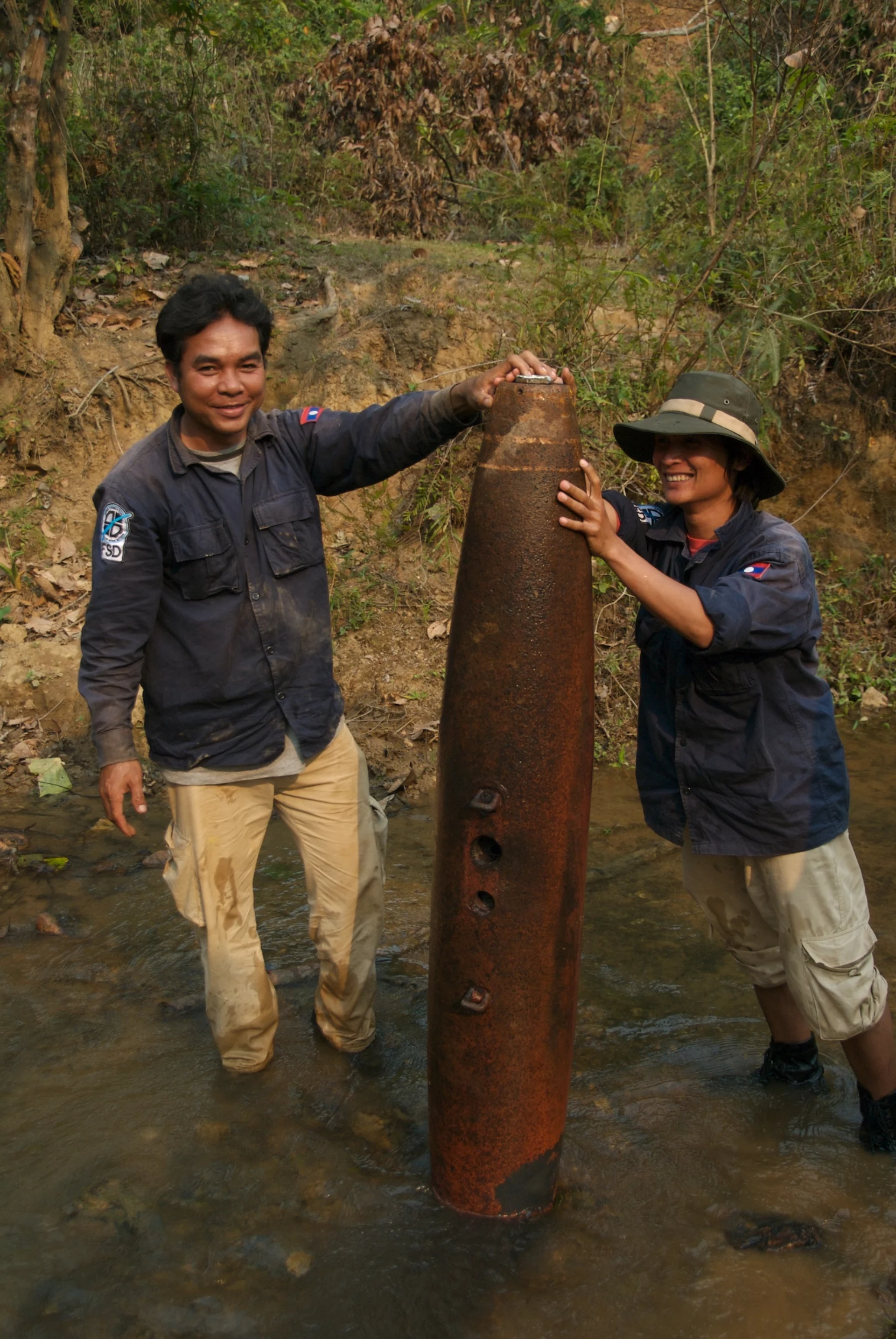
The massive bombings carried out during the Vietnam War left Laos heavily contaminated with explosive remnants of war. Hundreds of millions of submunitions were dropped across the country, around one-third of which are estimated to have failed to explode on impact. This contamination continues to endanger daily life: more than 20,000 people have been killed or injured since the end of the war, the majority of them children. In rural areas, where communities depend on rice cultivation, explosive ordnance hampers agricultural work and worsens food insecurity.
Our impact in Laos
+8,600
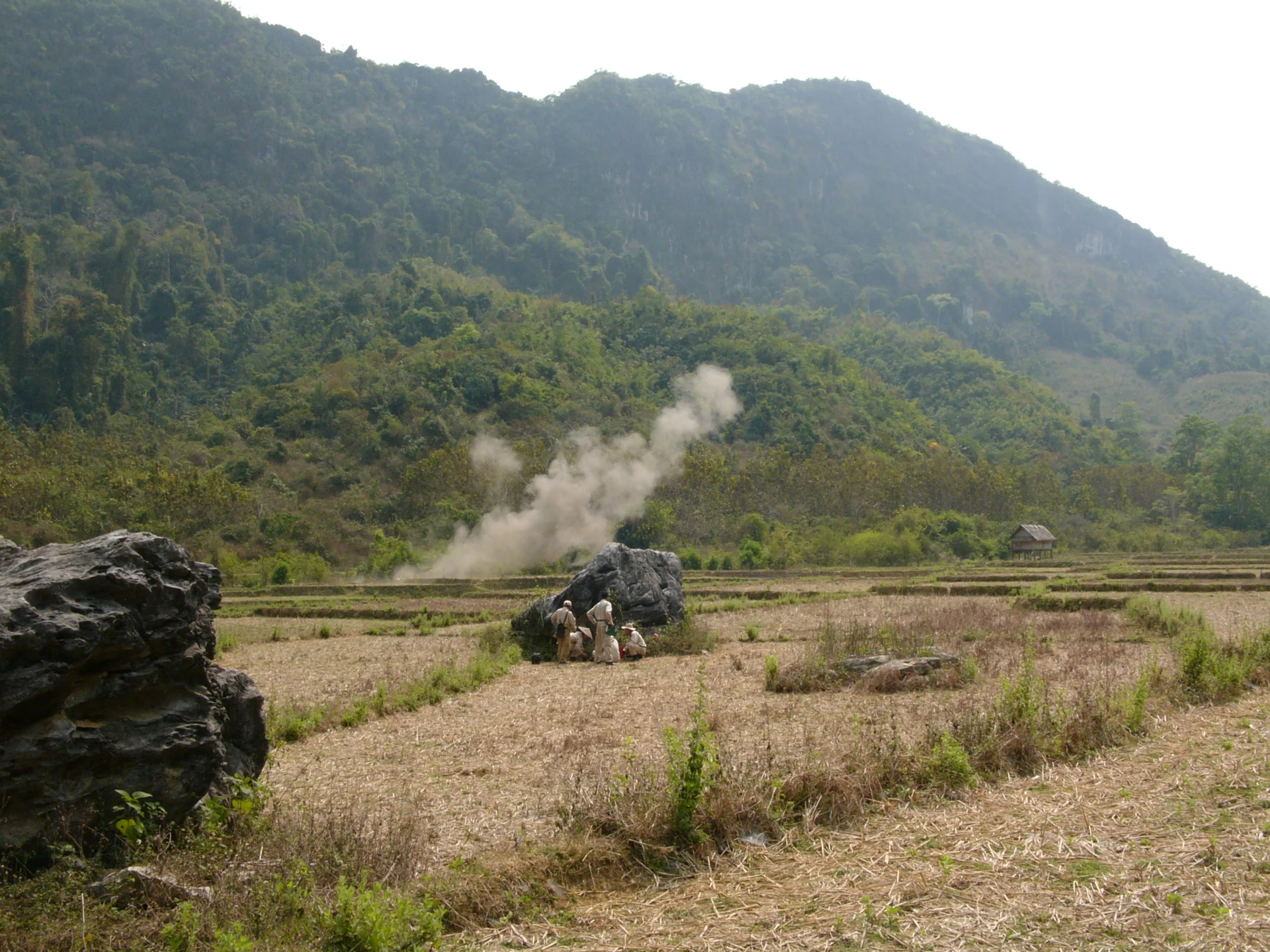
explosive remnants of war destroyed
+1,100,000
m2 of land made safe and returned to communities
Partnerships supporting rural communities
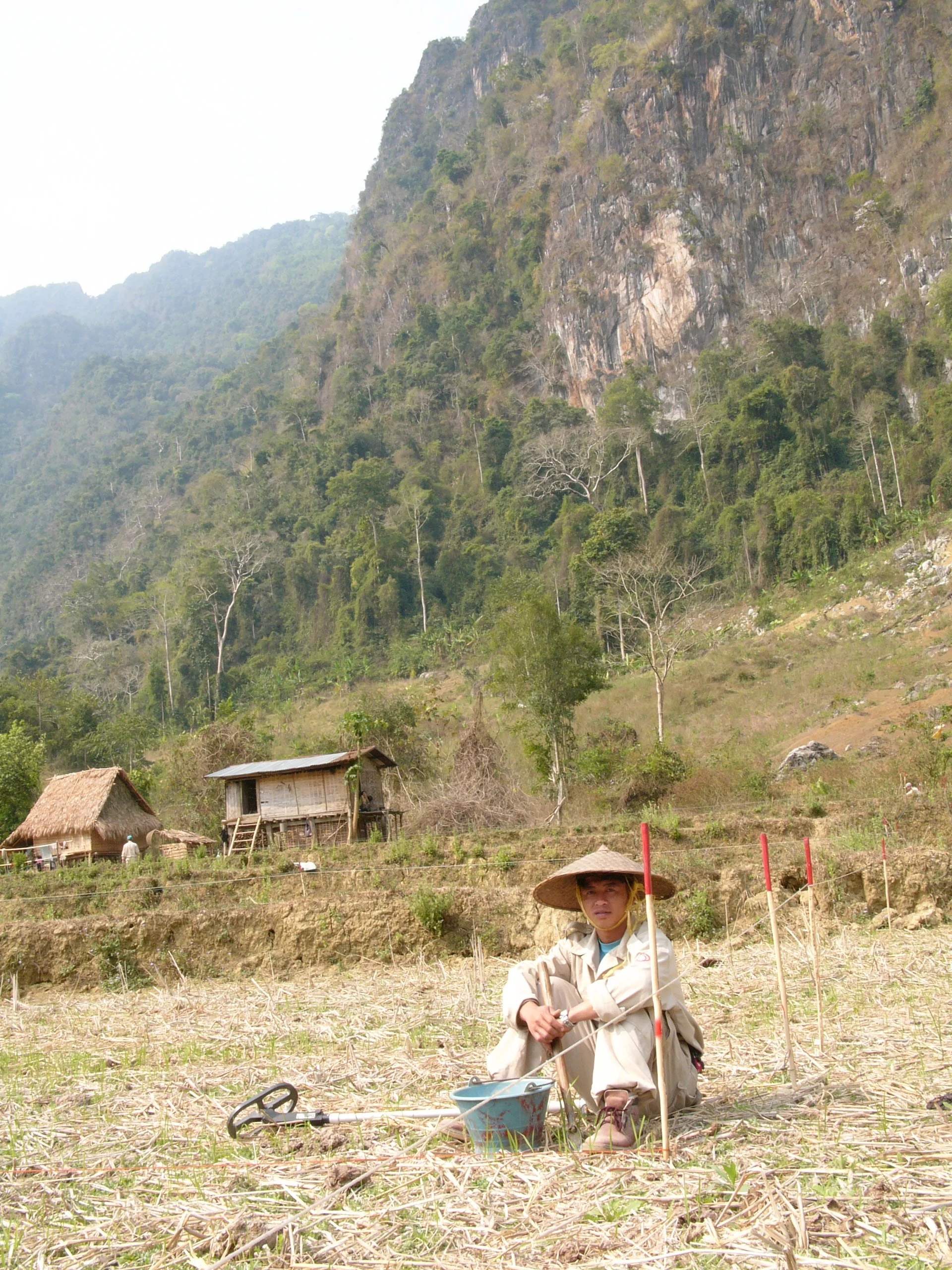
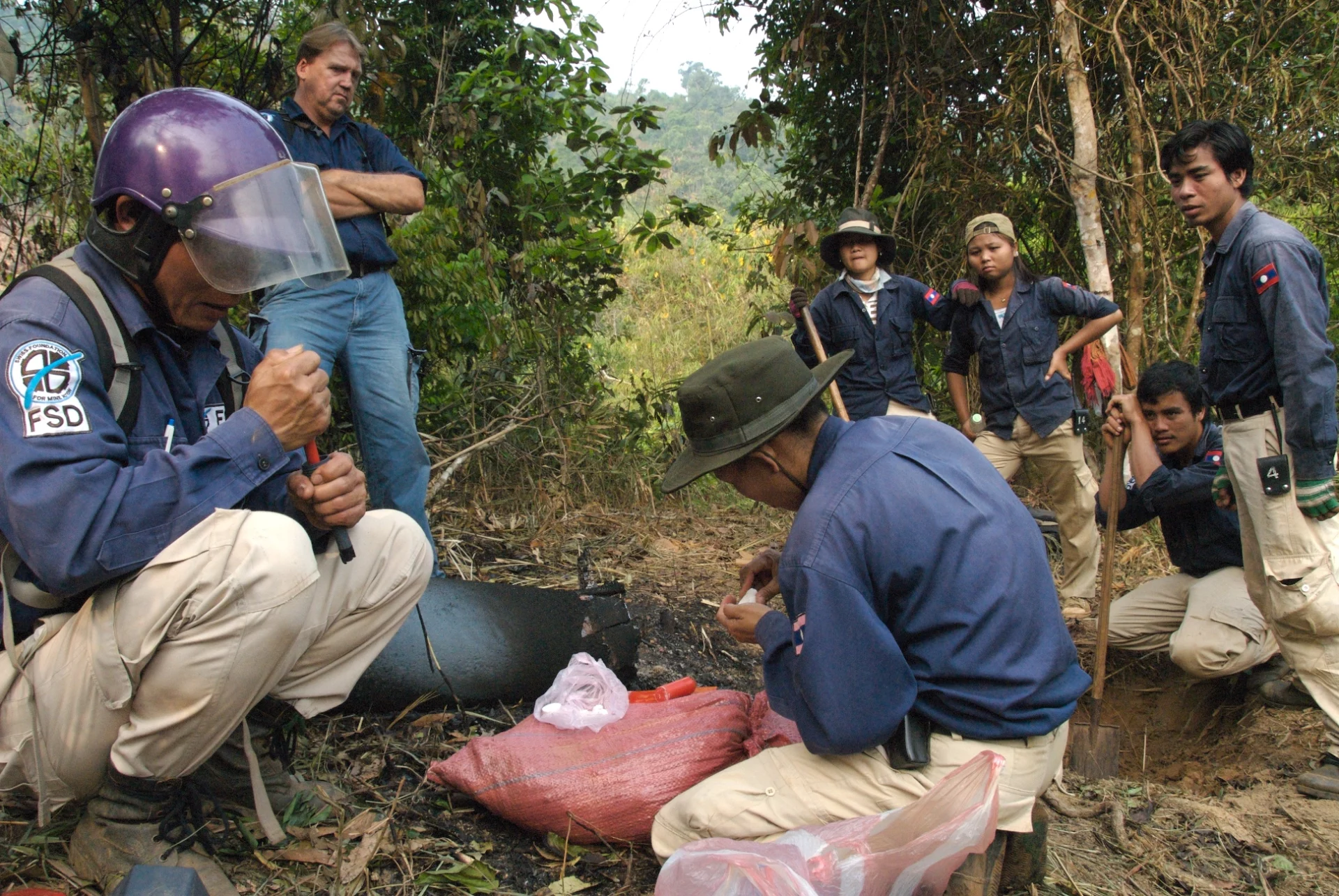
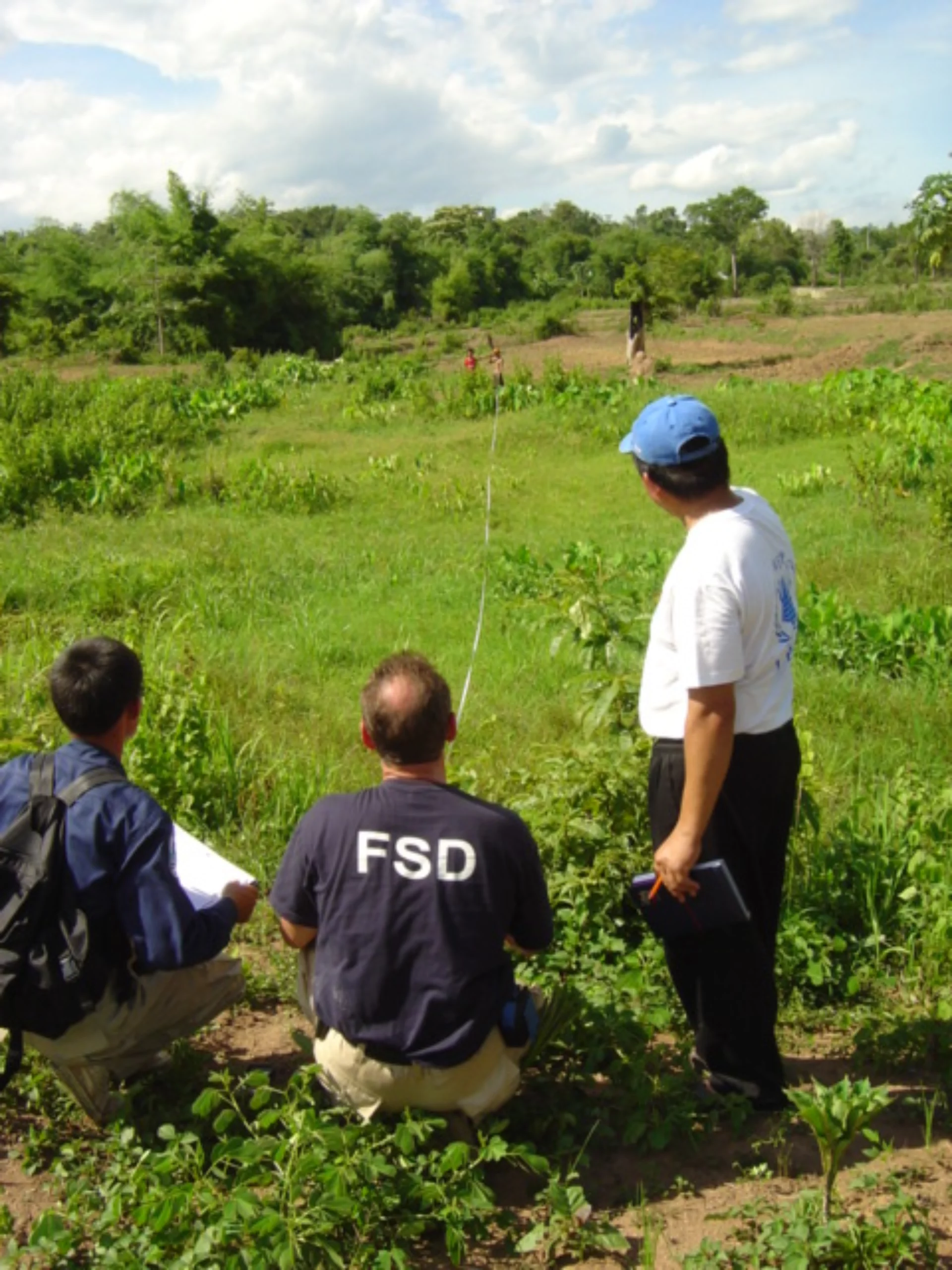
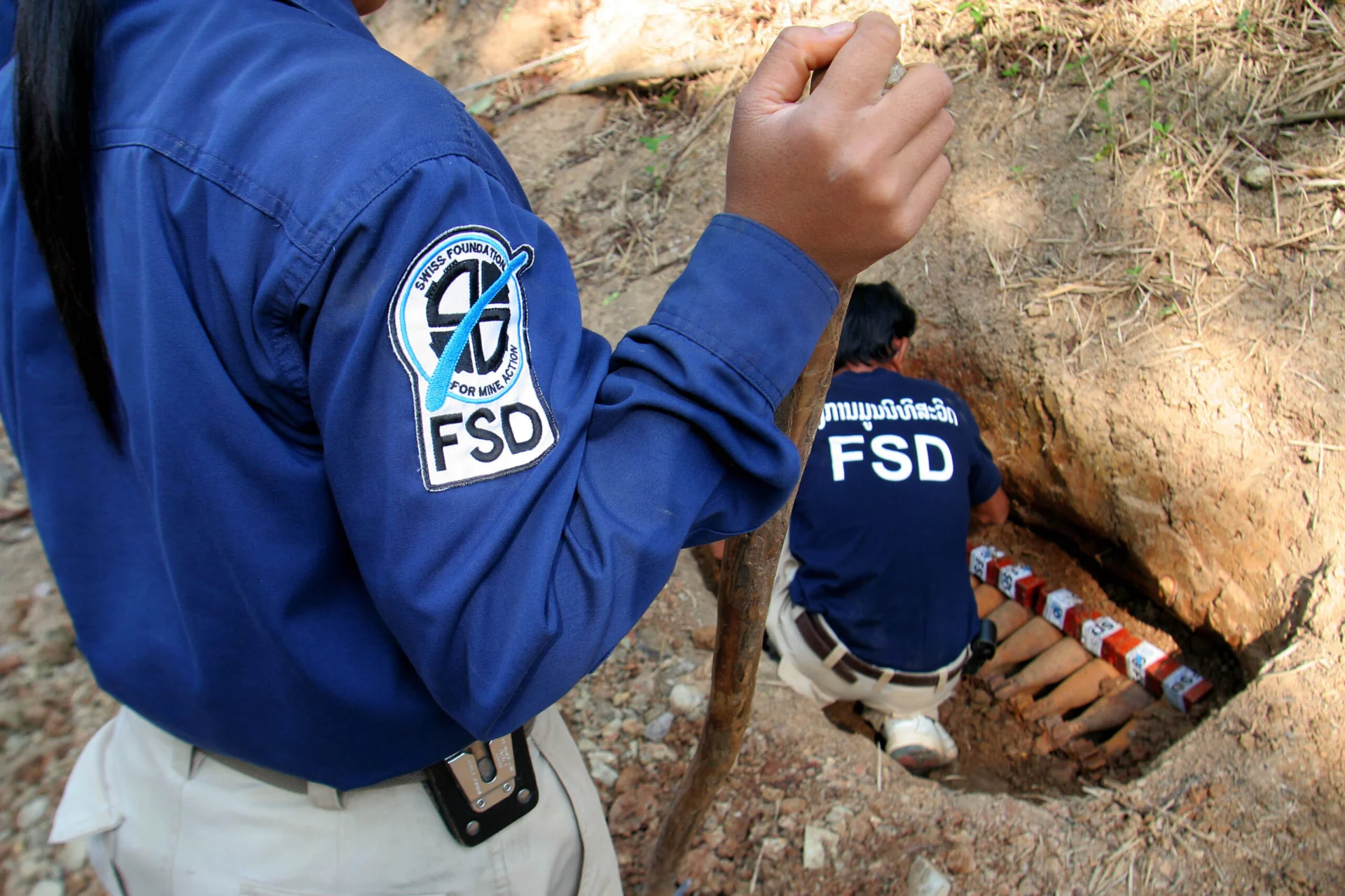
From 2004 to 2010, FSD supported the World Food Programme in rehabilitating rice fields, irrigation systems and fish farms, while clearing key areas for communities in Savannakhet Province. In 2007, in partnership with CARE Australia, FSD conducted clearance operations in the Sekong region as part of a livelihoods improvement project. Alongside its demining work, FSD trained local teams in explosive ordnance disposal, contributed to the development of national standards and helped establish a database for managing clearance operations.
Towards sustainable food security
FSD’s engagement helped improve food security for rural communities by clearing rice fields and making agricultural land safe. It also strengthened the technical and organisational capacities of national actors through the development of training standards aligned with international norms. These efforts enhanced the coordination and quality of demining operations and promoted the sustainable management of explosive hazards by local institutions.
From Bosnia to Ukraine
Discover our story
For nearly 30 years, FSD has been working to make land safer. Explore the key milestones of our humanitarian work since our first demining operation in 1998.
Latest news from FSD
View all
Interview with Olivier Shu – La Ligne de cœur (RTS La Première)
▶️ Listen now © Interview broadcast on RTS La Première, in the programme La Ligne de cœur About Olivier A demining expert…
Landmines and explosive remnants Machines, drones and technology Humanitarian demining Non catégorisé Ukraine
Mindanao: A New Operational Centre Enabling a Rapid Response to Explosive Risks
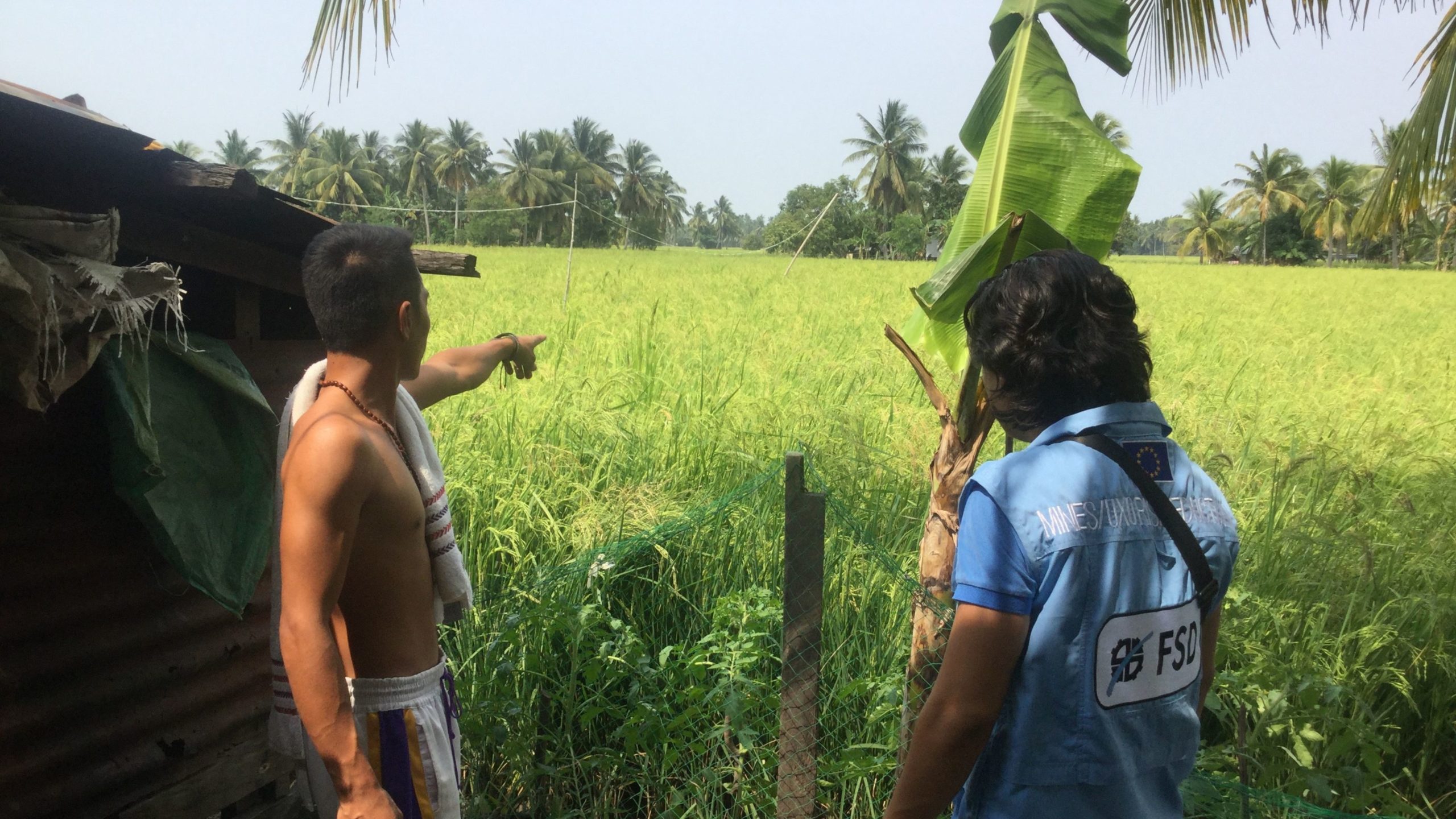
Until recently, many residents were reluctant to report the presence of these items, due to fear, mistrust, or a lack…
Humanitarian demining Non catégorisé Philippines
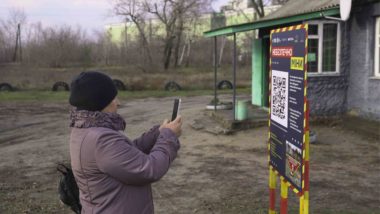
QR Codes to Save Lives
In Kharkiv province, Ukraine, residents live every day with the invisible yet very real presence of explosive remnants of war. FSD…
Prevention and risk education