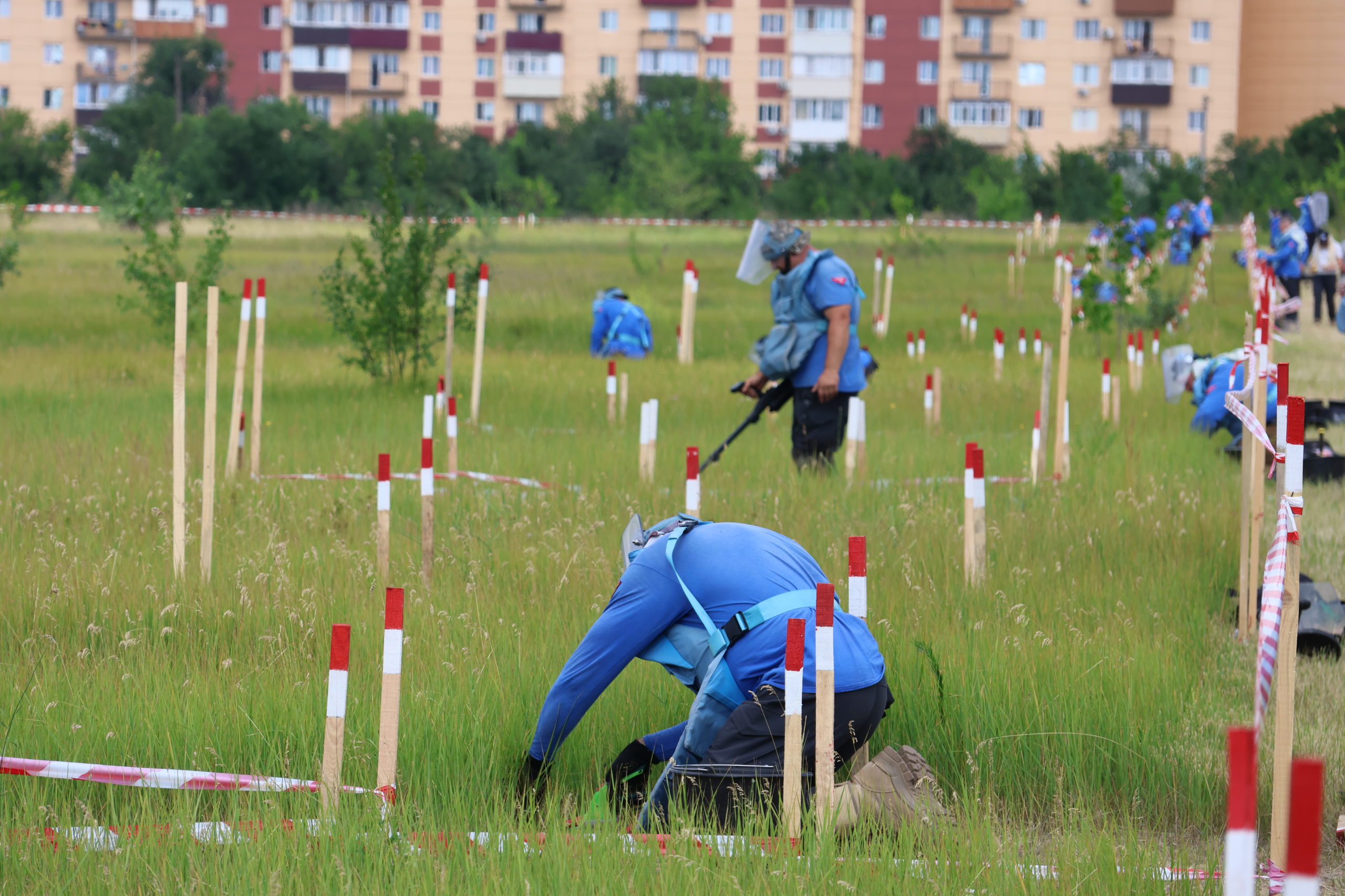
Fighting in Ukraine has left behind millions of landmines, cluster munitions, and unexploded or abandoned ordnance, making the country one of the most contaminated in the world. More than a quarter of Ukraine’s territory is believed to be affected by these explosive remnants. This update highlights FSD’s demining work in Ukraine since 2015.
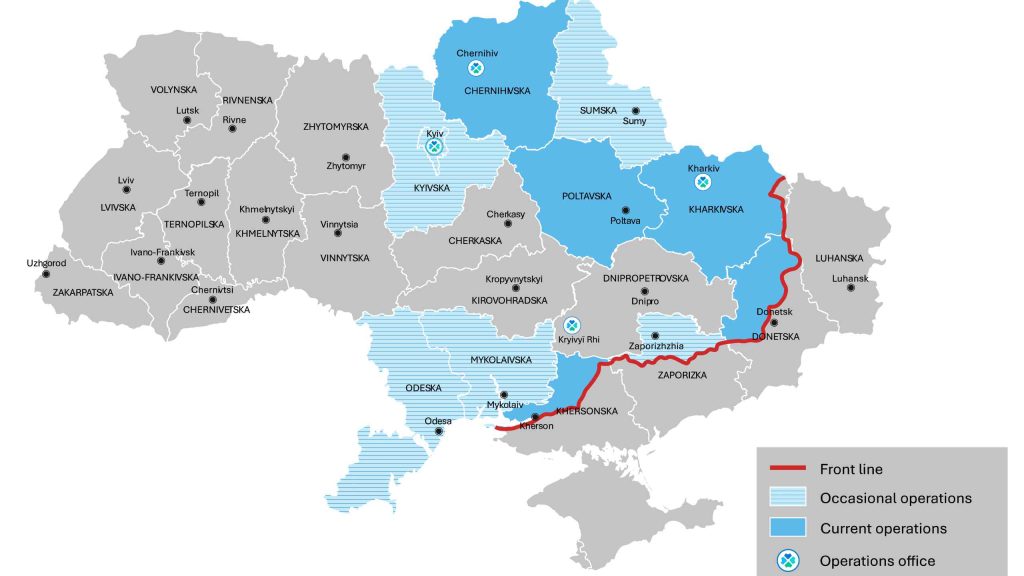
As of March 2026, more than 450 FSD staff members are actively engaged in the provinces of Chernihiv, Donetsk, Kharkiv, Kherson and Poltava.
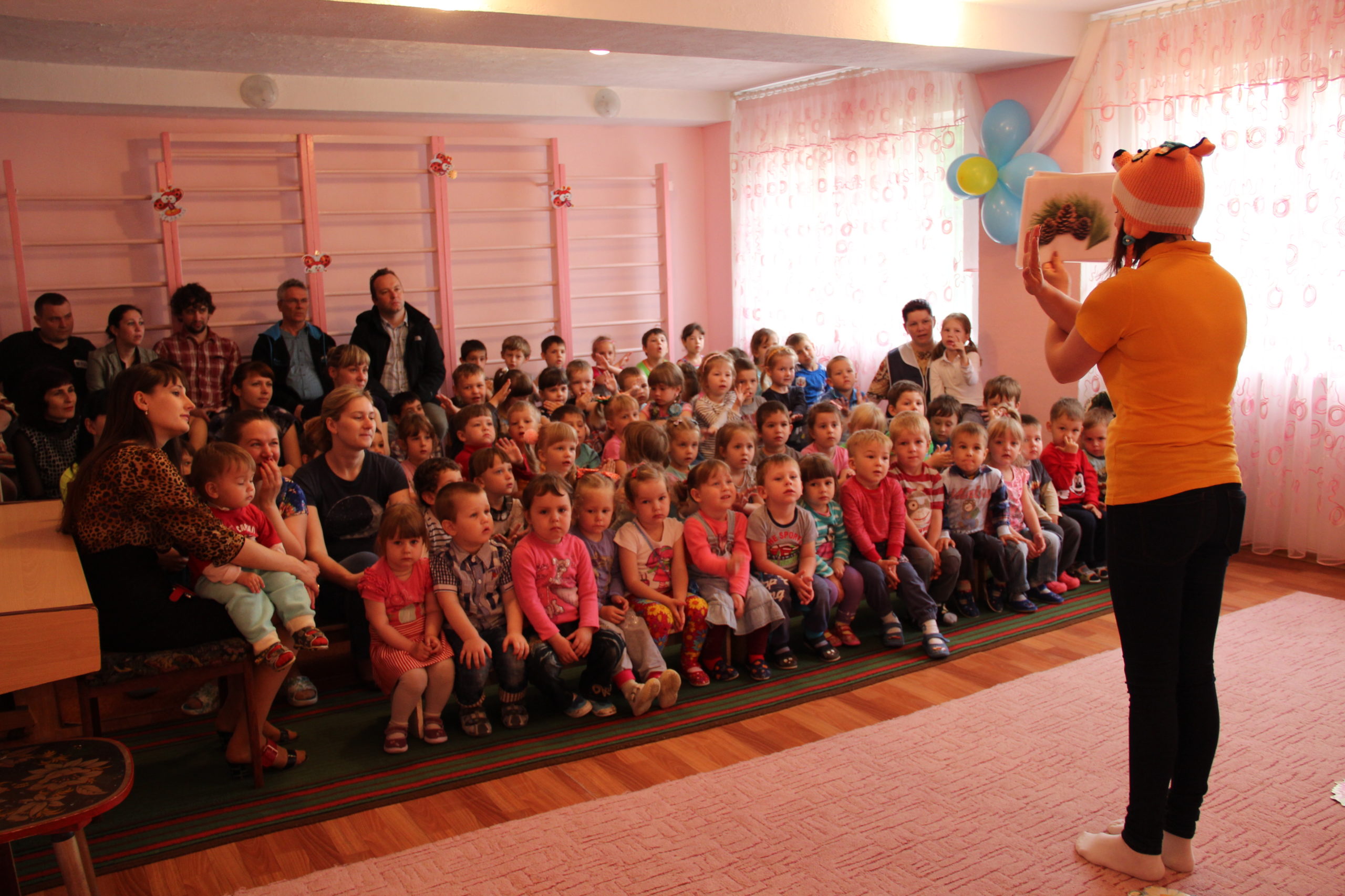
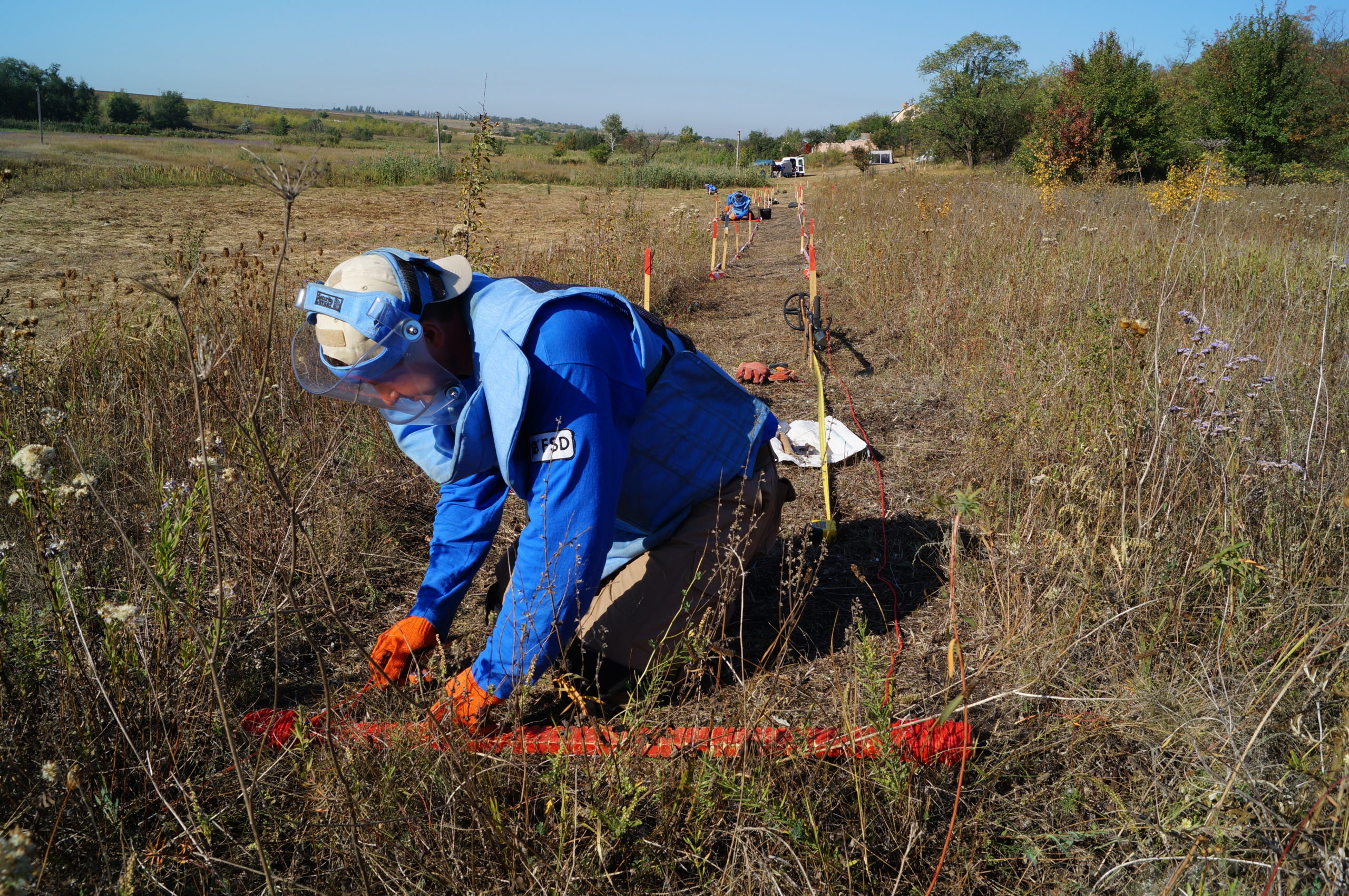
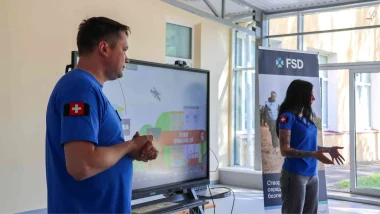
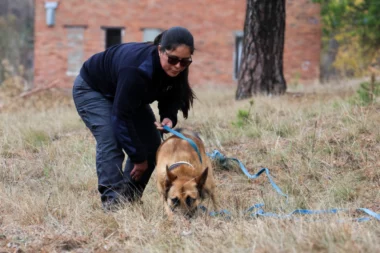
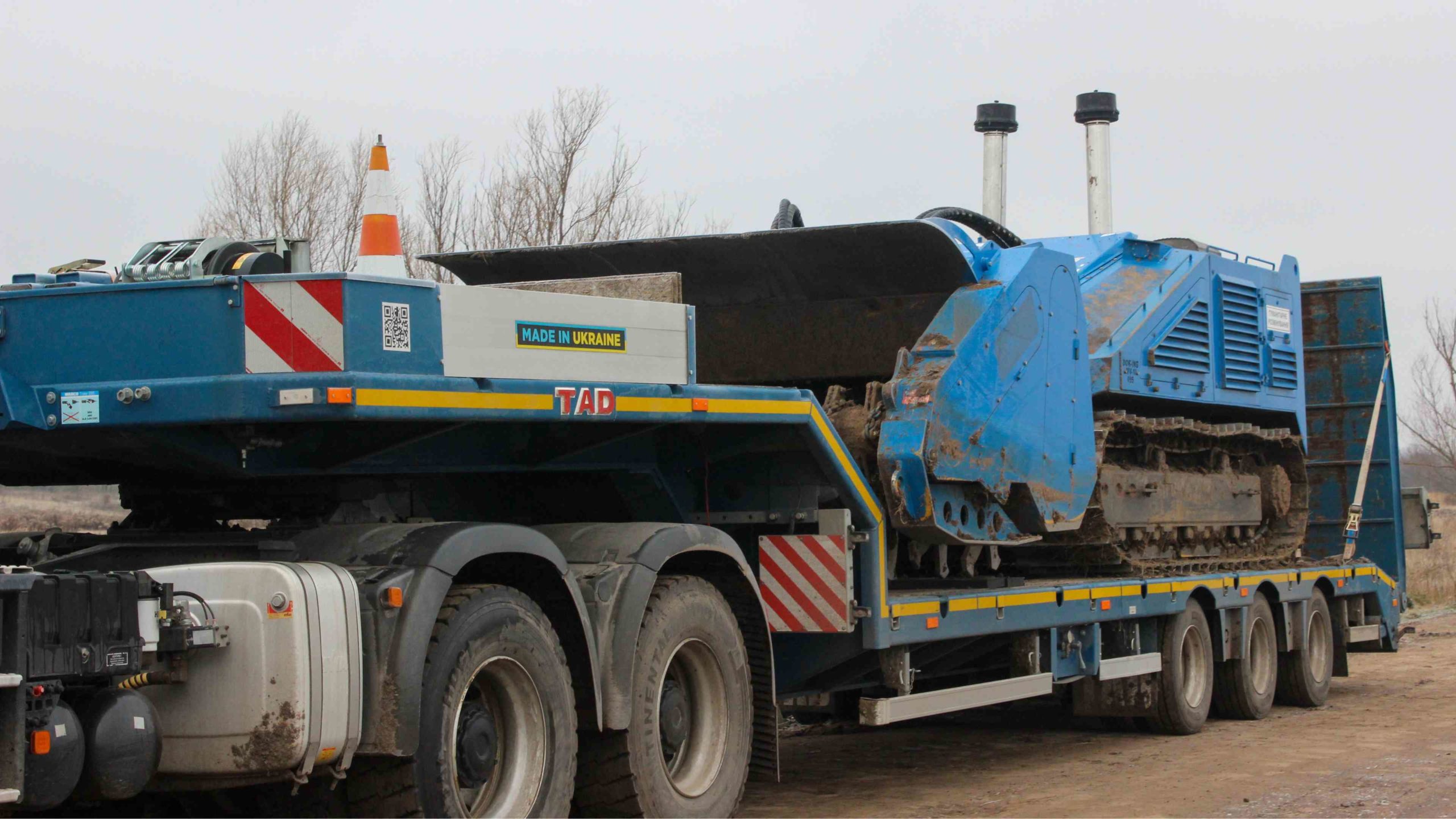
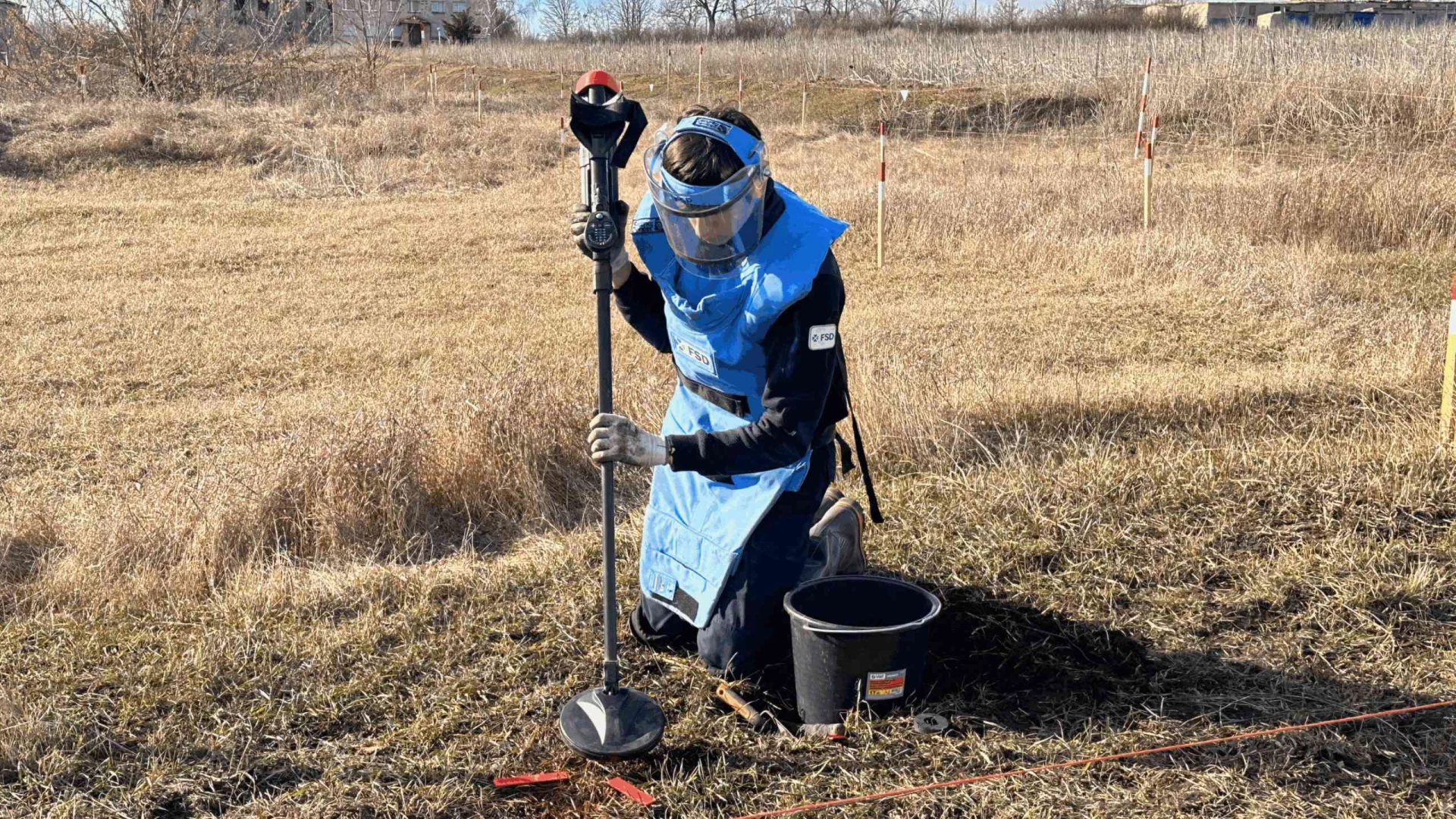
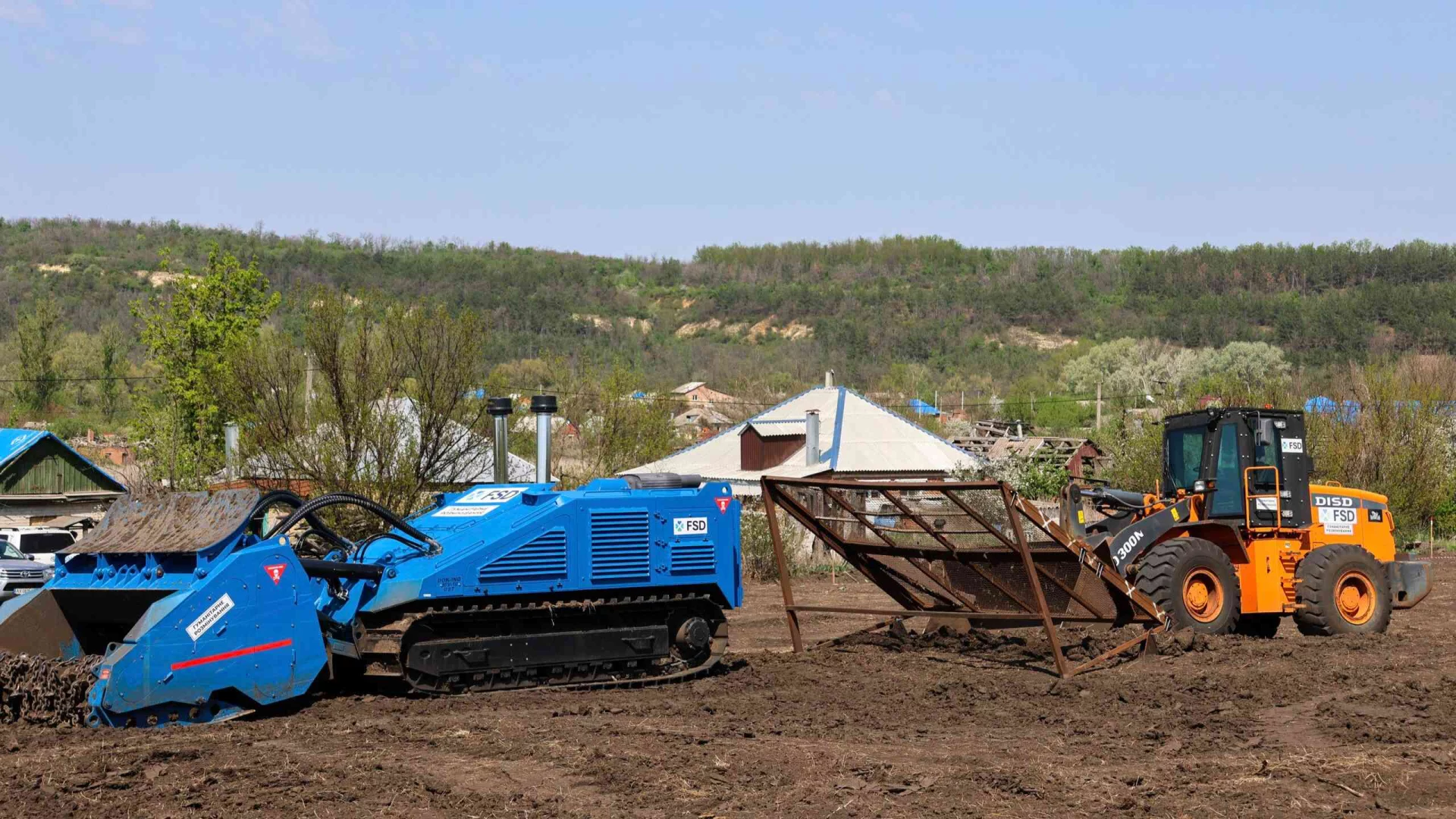
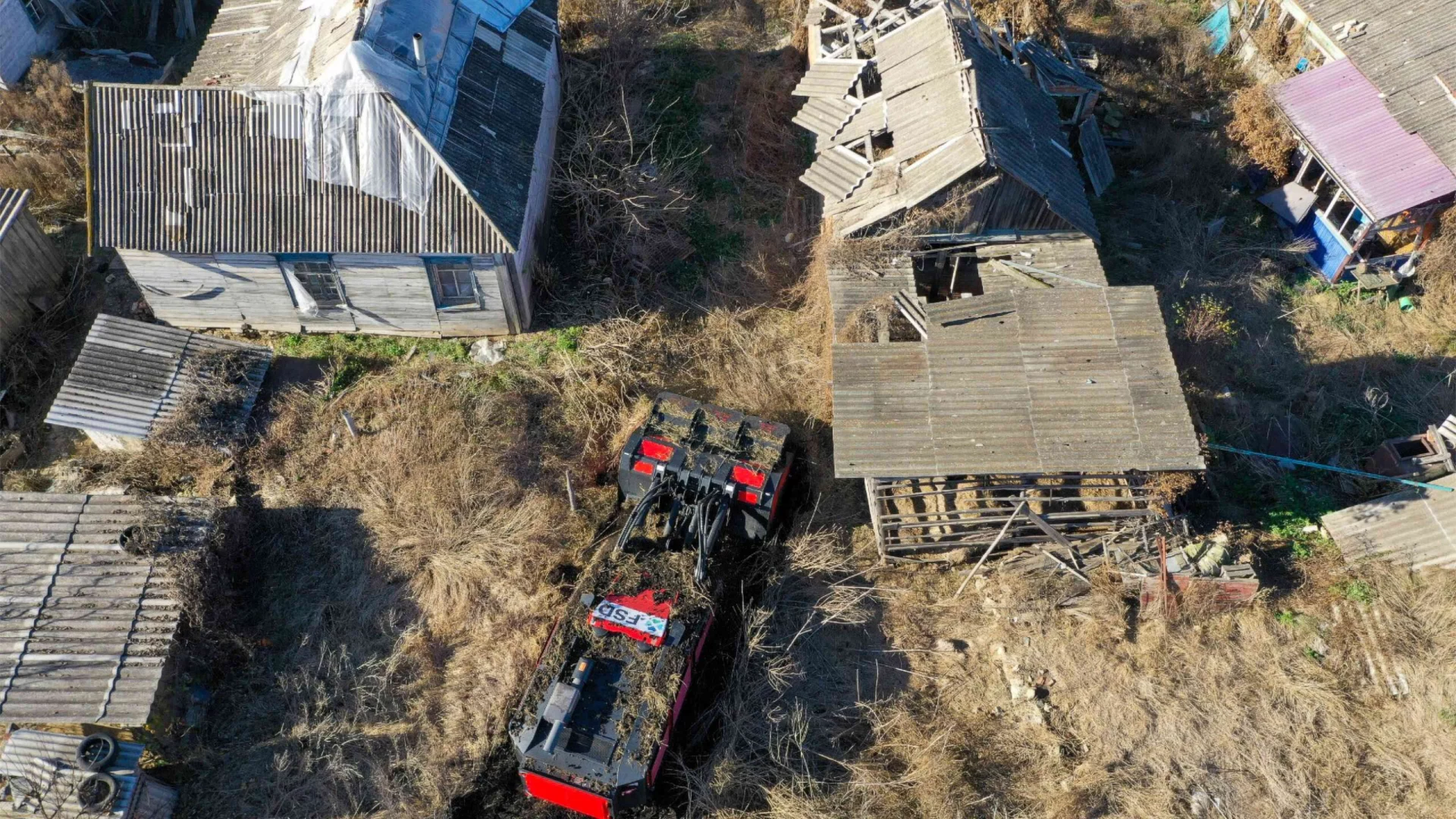
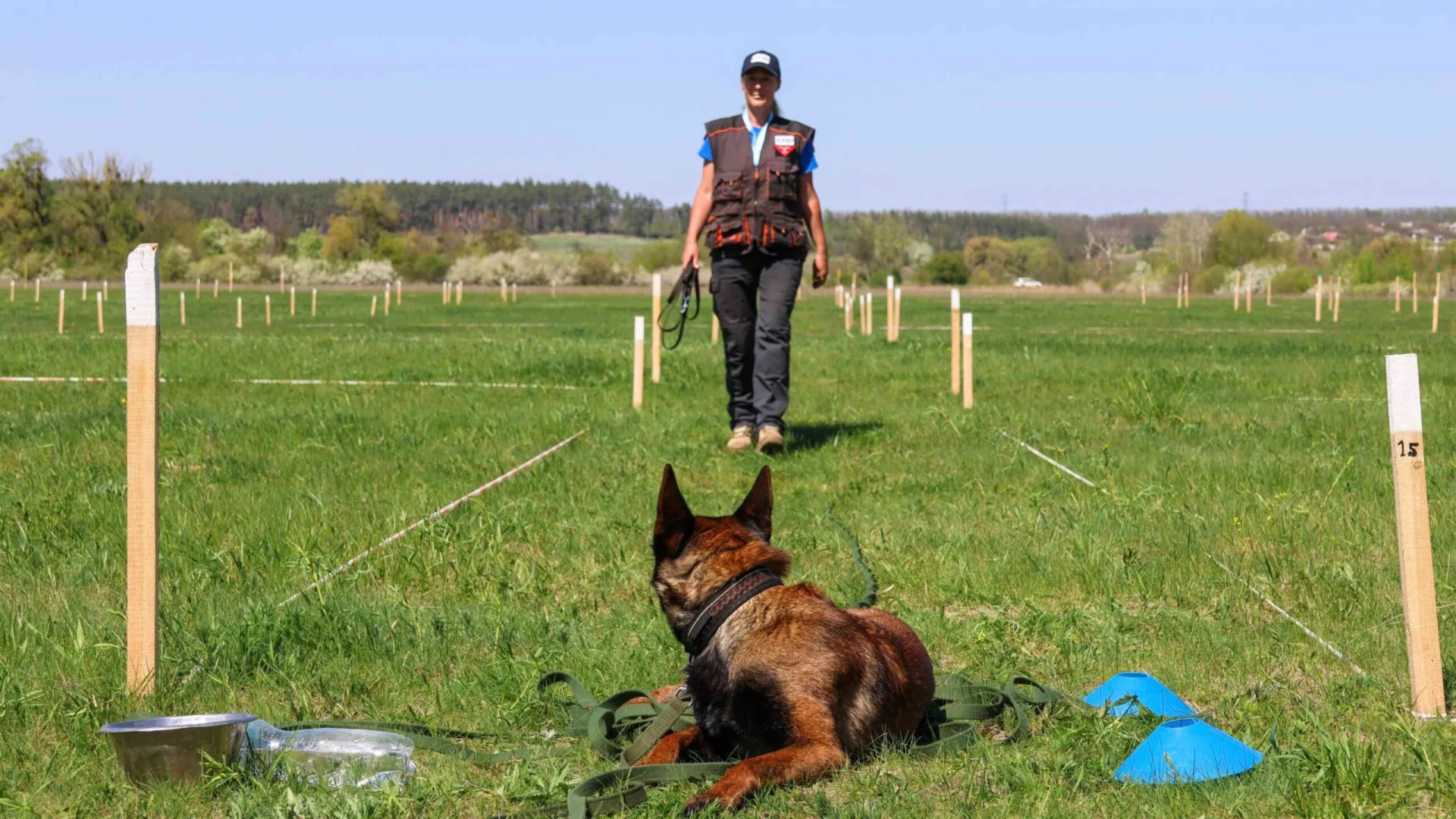
Twelve teams are currently conducting surveys of suspected hazardous areas, while thirty-three demining teams are focused on locating explosive devices in minefields and former battle zones. Specialised machinery is being used to prepare rural areas for clearance, and armoured construction vehicles assist in clearing rubble from structures damaged or destroyed by ordnance. The first mine detection dog team was deployed in mid-September 2025. In parallel, nine teams are delivering risk education in schools and villages, complemented by online sessions and digital campaigns across social media platforms.
Our impact since June 2022
4,000,000
square metres of land cleared and secured
130,000,000
square metres of land surveyed
500,000
people educated on the risks of explosive ordnance
From 2023 onwards, FSD has been providing logistical support and expertise to the explosive ordnance disposal teams of the State Emergency Service of Ukraine and is currently strengthening their capacities in mechanical demining through training and the rehabilitation of a workshop for the repair, maintenance and modernisation of demining machines.
FSD also supports the local NGO Ukrainian Center for Humanitarian Protection (UCHP) in developing its operational and institutional capacities in mine action, with the aim of enabling it to independently conduct humanitarian demining operations in the future.
Map of FSD’s operations in Ukraine
Background of our operations in Ukraine
FSD began working in Ukraine in early 2015, focusing on the Donbas region along the line of contact between areas controlled by the Ukrainian government and those under separatist control. Our risk education teams initially launched emergency campaigns in schools and villages, teaching residents how to stay safe near landmines and unexploded ordnance. At the same time, survey teams assessed and mapped areas contaminated by explosive remnants of war.
In 2016, FSD started clearance operations, recruiting, training, and deploying around 50 local staff from an operational base in Sloviansk and Marioupol. Over the following years, our deminers surveyed dozens of former battlefields and identified hundreds of unexploded ordnance items. Simultaneously, FSD supported Ukrainian institutions in establishing a national mine action authority.
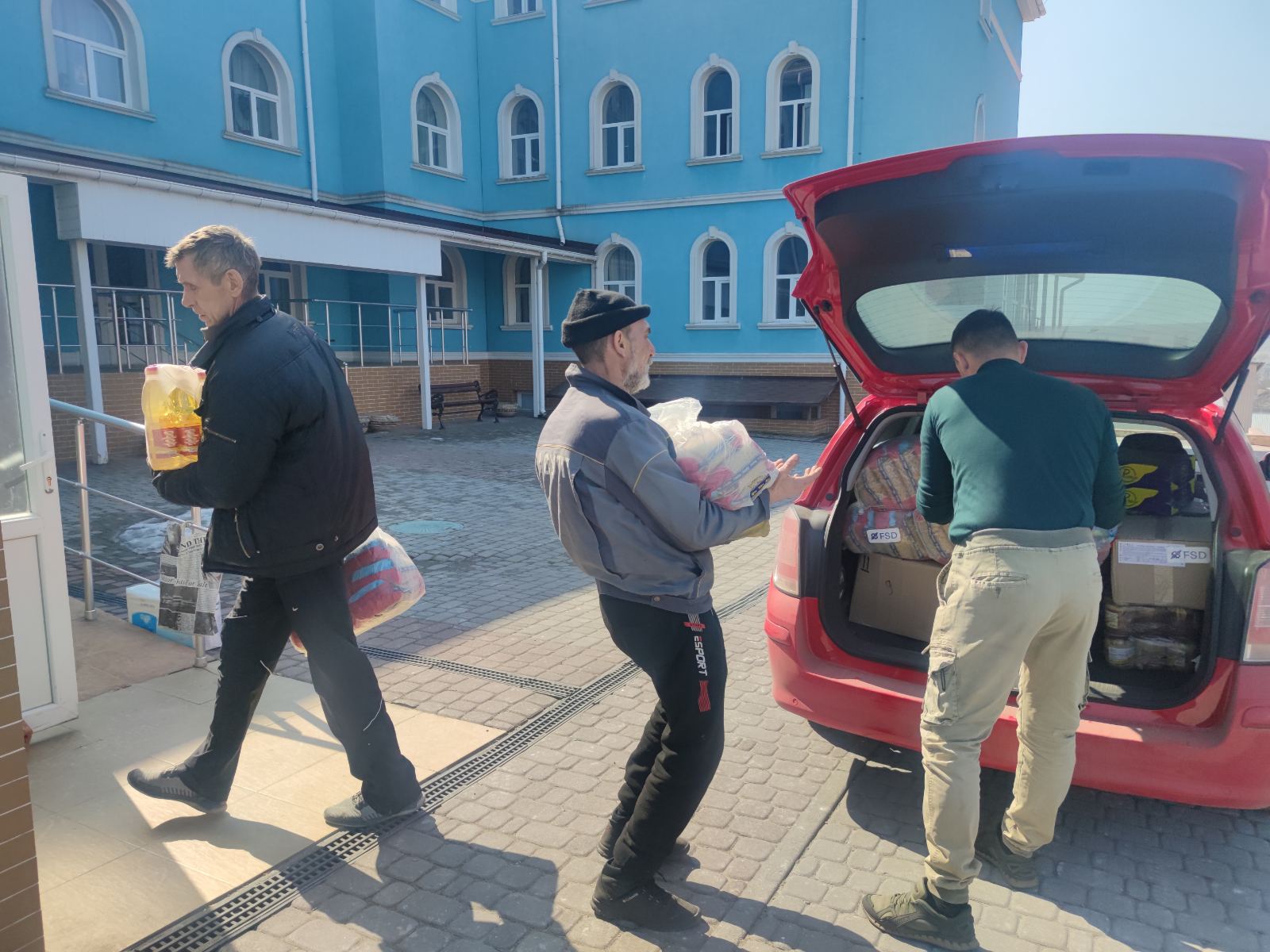
At the end of February 2022, as the armed conflict escalated, FSD temporarily suspended and reoriented its activities to allow staff to ensure the safety of their families and provide emergency humanitarian aid to communities affected by the conflict. By June 2022, the improved security situation enabled FSD to establish a new operational base in Chernihiv, followed by another in Kharkiv province in November, allowing the resumption of demining activities.
In 2023, FSD strengthened its operational capacities through the recruitment and training of staff, as well as the acquisition of equipment. Two satellite operations offices were opened in Donetsk province and in Kryvyi Rih to support the northeastern part of Kherson province.
Objectives for the next twelve months
Expanding humanitarian reach: In 2026, FSD mine action operations will continue at full speed across the four provinces of Chernihiv, Kharkiv, Kherson, and Donetsk while geographic expansion within established areas of operation and into neighbouring provinces is planned for the coming months.
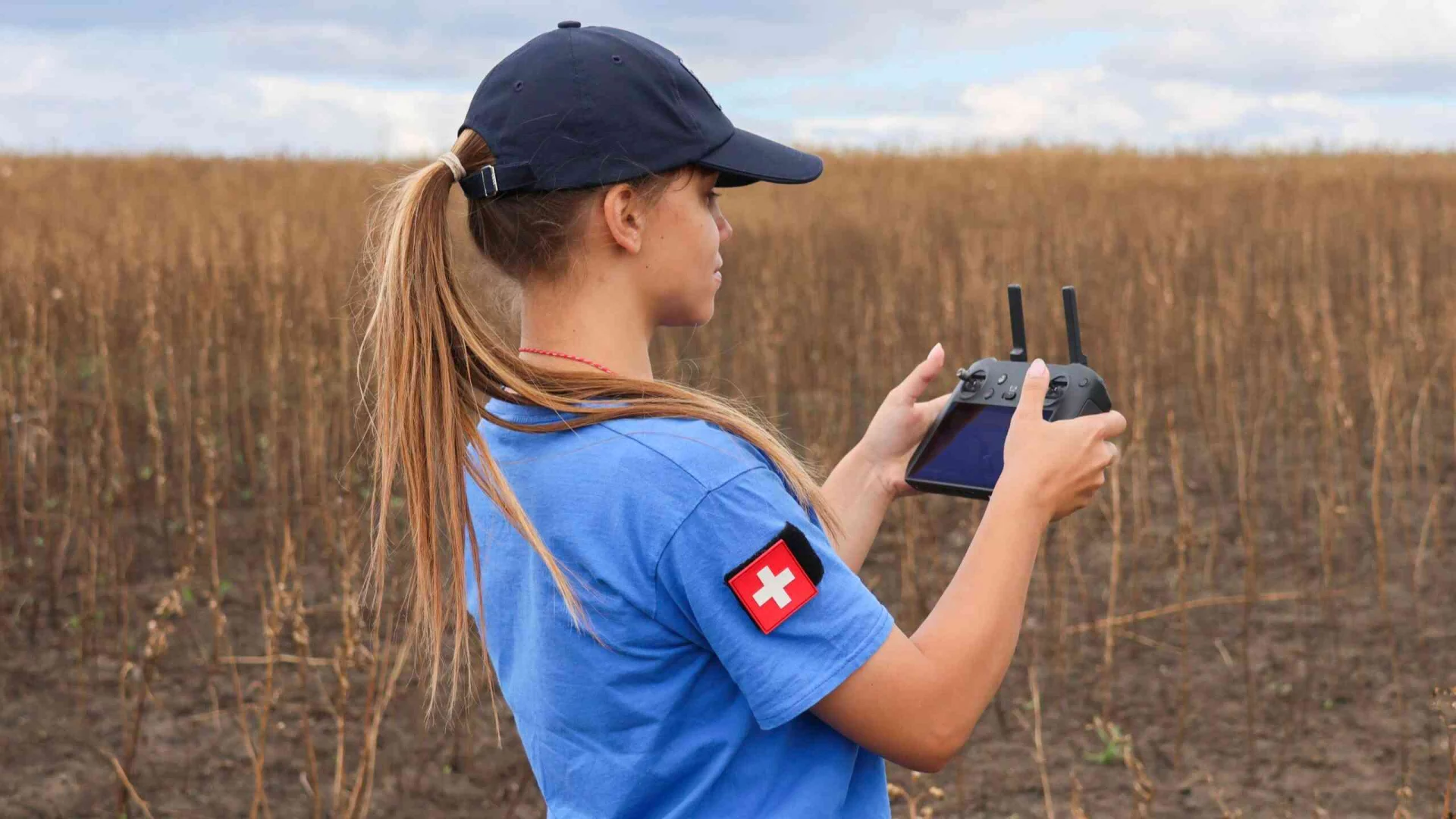
Increased use of dogs and technology: In late 2025, our first mine detection dog team was deployed to support FSD’s manual demining actitivies and will be joined by a second dog team in 2026. In parallel, FSD will continue to work with non-profit start-up FindMine to test their UAV-based remote sensing system in Ukraine. The UAV is equipped with a ground-penetrating radar and can detect buried objects such as mines and unexploded ordnance. FSD is piloting an innovative digital hazard marking system. Signs with QR codes have been installed in village centres and along routes leading to areas contaminated with explosive ordnance. By scanning the codes, people can access up-to-date digital maps showing contamination risks, helping them understand their surroundings and avoid danger. The system is currently being tested and will be refined based on user feedback and field experience.
Reinforcement of local capacity building projects: FSD will continue to support its local NGO partner, the Ukrainian Center for Humanitarian Protection (UCHP), in strengthening both its operational and structural capacities. This includes the development of key support functions such as logistics, finance and human resources. UCHP has already secured accreditation for explosive ordnance risk education, non-technical survey and clearance activities, and trained teams are currently in the process of being transferred to its management. The technical expertise of FSD’s national staff will also be continuously strengthened through regular training programmes delivered by FSD’s in-house training centre, which is accredited to provide the standard deminer training course required in the country.
Resource mobilisation for reconstruction: The widespread contamination from mines and unexploded ordnance demands sustained support as new regions are liberated and new challenges emerge for humanitarian deminers. FSD remains committed to maintaining and expanding activities in its operational areas to maximise humanitarian impact and advance the clearance of explosive hazards. FSD is also working with stakeholders to leverage its demining expertise and the use of existing mechanical assets in support of reconstruction efforts, paving the way for safe and sustainable recovery in affected communities.
Our Funding
FSD’s mine action activities in Ukraine are supported and funded by institutional donors, private donors, and Swiss cantons and municipalities. FSD remains committed to maintaining and expanding its operations in order to maximise humanitarian impact for affected populations and accelerate the clearance of the country.
Receive monthly news, testimonies, and stories from the field.
Being informed is the first step to action.
"*" indicates required fields
This website uses cookies to ensure a better user experience and to measure the effectiveness of our campaigns.
More information .
Audience measurement
We use audience measurement tools (such as Google Analytics 4 and Clarity), via Google Tag Manager, to understand how the website is used and to improve it. The data are used for statistical purposes only and are not used for targeted advertising.
Advertising & campaign measurement
We also use tags related to Google Ads in order to measure the performance of our campaigns and, where appropriate, to offer you more relevant advertisements.